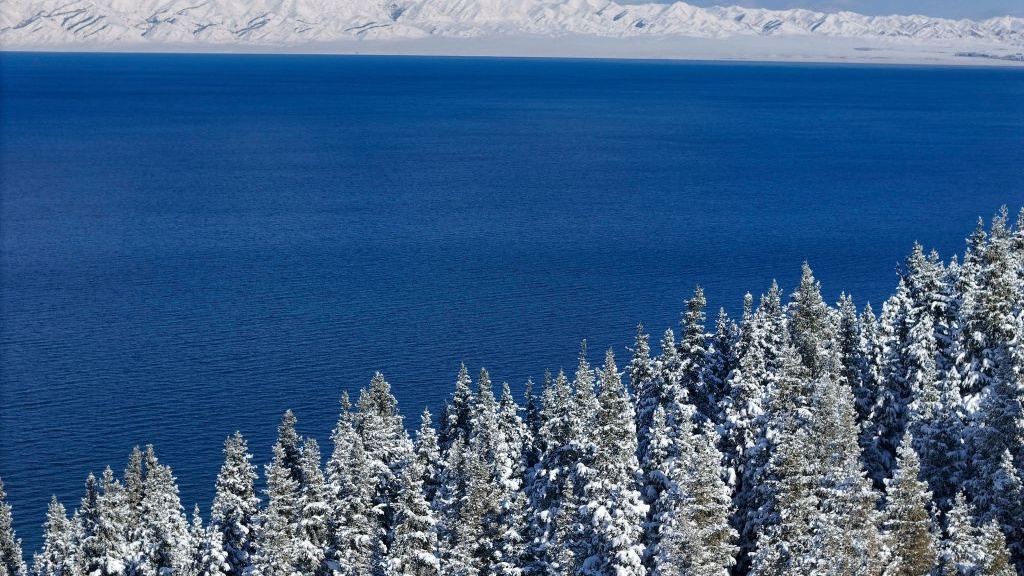
Following 2025's first-ever "snow break" in multiple parts of Northwest China's Xinjiang Uygur Autonomous Region, Urumqi, Hami, Altay and other places have successively announced their holiday schedules for this winter. With the student influx approaching, ski resorts, scenic areas and study-tour institutions across the region are gearing up for a second snow break.
The inaugural snow break already demonstrated strong consumer-driving power. From December 1 to 5, 2025, a total of 436,000 primary and secondary school students in Urumqi enjoyed a break from school. The Baiyun Ski Resort in Urumqi city alone welcomed about 15,000 students during the first snow break, according to the Xinjiang Daily.
"The daily visitor average reached 8,000 during the holidays, including 3,000 students. After the holidays began, night skiing sessions averaged over 1,000 visitors a day - more than double the previous level," Jiang Junru, the resort's new-media operations manager, said according to the report.
This year, ski resorts are taking action well in advance. "To meet the concentrated demand for children's sizes, we have added more than 2,000 sets of ski boots, skis in sizes 36-38 and matching helmets this year, giving priority to students' equipment needs," Jiang said.
In addition to the extra gear, the resort has expanded its team of certified instructors and organized pre-season training focused on teaching young people, safety protection and emergency response, aiming to raise both teaching quality and service standards.
The four major ski resorts in Altay Prefecture are offering local primary and secondary school students ski-equipment rentals starting at 50 percent off, and roughly 20 percent off food and accommodation. They have also set up dedicated student service counters, opened separate teaching areas, and reserved ski gear exclusively for students, according to the report.
While ski resorts are busy preparing, scenic spots are rolling out attractive offers. Tianshan Wildlife Park will allow students aged 18 and under free entry upon presentation of the official snow-holiday notice, with accompanying parents enjoying a 20 percent off on tickets, Xinjiang Daily reported.
Xinjiang's snow break practice is a microcosm of the nationwide surge in ice-and-snow consumption this winter. From the northwest to the northeast, localities are seizing the window of opportunity in the ice-and-snow economy in their own ways.
As dusk falls, the lights of the Wanlong Ski Resort in North China's Hebei Province come on one after another. On the bustling hot-pot street, nine different bowls of broth are lined up in a row. Skiers pull off their goggles, shed their heavy snowsuits and gather around the tables to enjoy hot pot. "On opening day, daytime visitors already exceeded 3,000, with more than 1,000 coming for the night session," Liu Yu, a staff member from the resort said, according to the People's Daily.
In Chongli, also in Hebei, a zone tailored for minors has been established, while the Fulong Ski Resort has added three new night trails and opened a pet snow-play zone.
At the Lake Songhua Ski Resort in Northeast China's Jilin Province, the 2.8-kilometer sunset boulevard is now fully open. Skiers can descend westward from the summit, carving turns against the glow of the evening sky and savoring a romantic moment.
At the Yabuli Ski Resort in Harbin, Northeast China's Heilongjiang Province, more than 20 ice-and-snow entertainment offerings, including mountain hot springs, a cat park and bonfire EDM parties, have been launched simultaneously to enrich the ski-vacation experience.
This winter, China's ice-and-snow economy has shown a clear trend of extending from single skiing experiences to composite consumption scenarios. Localities, each leveraging their own strengths, have integrated student holidays, night-time economies, food and leisure, family entertainment and snow sports into a consumption ecosystem that encourages longer stays and repeat visits. Ice and snow are no longer merely a seasonal spectacle, but are becoming a lasting engine for winter consumption and industrial ecosystem development.